One of the biggest mistakes landlords make is holding out for the "perfect" rent while their property sits empty. It feels logical. If your market research suggests your rental should bring in $2,000 per month, why would you accept $1,800? That's giving away $200 every month.
But here's what many landlords overlook: A Vacancy is expensive.
Every month your property sits empty, you're still paying the mortgage, taxes, insurance, HOA dues, lawn care, utilities, and maintenance—without collecting a single dollar in rent. Sometimes taking 90% of your target rent today is far more profitable than waiting three months for 100%.
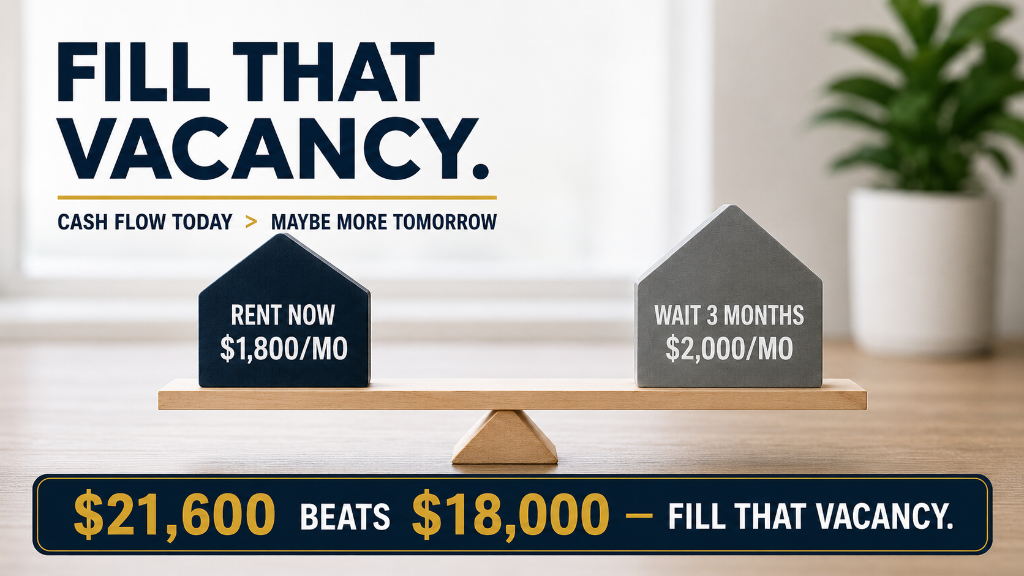
Let's Do the Math Assume your target rent is $2,000 per month.
Option A: Price to Rent Quickly
- Monthly rent: $1,800 (90% of target)
- Vacancy: 0 months
- Annual rental income: $1,800 × 12 = **$21,600
Option B: Hold Out for Full Price
- Monthly rent: $2,000
- Vacancy: 3 months
- Months rented: 9
- Annual rental income: $2,000 × 9 = $18,000
The Result
By accepting just 10% less in rent, you actually earn: $21,600 − $18,000 = $3,600 MORE That's not a typo. The landlord who accepted the lower rent made $3,600 more over the course of the year.
Where Is the Break-Even Point?
Many landlords are surprised to learn how little vacancy it takes to erase the benefit of charging a higher rent. Let's compare the two strategies mathematically. If you collect $1,800 for twelve months: $1,800 × 12 = $21,600, to beat that amount at $2,000 per month: $2,000 × Months Rented > $21,600 Months rented must exceed: 21,600 ÷ 2,000 = 10.8 months. That means your vacancy can be no longer than about 1.2 months. If your property sits vacant longer than roughly 36 days, taking the lower rent would have produced more income over the year.
The Hidden Cost of Waiting - Vacancy costs much more than lost rent. An empty property often means:
- Mortgage payments continue.
- Insurance premiums continue.
- Property taxes continue.
- HOA dues continue.
- Lawn care and utilities continue.
- Marketing expenses increase.
- More showings and more time invested.
- A vacant home is at greater risk for vandalism, theft, and unnoticed maintenance problems. Those costs don't stop simply because no one is living there.
Cash Flow Matters - Rental property is a cash-flow business.
Consistent income allows you to:
- Pay your bills on time.
- Build reserves.
- Handle unexpected repairs.
- Reduce financial stress.
- Continue investing for the future.
A property producing reliable income is almost always more valuable to your business than one sitting empty while waiting for a tenant willing to pay just a little more.
Price for the Market, Not Your Emotions
Every landlord believes their property is worth a little more. Sometimes they're right. But the market—not our opinions—determines rent. If multiple qualified tenants are passing on your property while nearby homes are leasing, the market is telling you something. Listening to that message early can save thousands of dollars.
The Bottom Line There's nothing wrong with maximizing your rental income. In fact, every landlord should. But maximizing income doesn't always mean charging the highest possible rent. Sometimes the smartest financial decision is to adjust your price slightly, fill the vacancy quickly, and keep the cash flowing.
Remember - Collecting 90% of the rent today is usually far better than collecting 100% after several months of vacancy. That's not settling. **That's good business
.**

Paul's Take
Over the past 40 years, I've watched landlords make this same mistake over and over again. A property becomes vacant, and the owner becomes fixated on getting "top dollar." They refuse to negotiate, convinced that someone will eventually come along willing to pay the asking price.
Sometimes they do. But while they're waiting, another month goes by with no rent coming in. Then another. Before long, they've lost far more in vacancy than they ever hoped to gain by holding out for an extra $100 or $200 a month.
Smart investors understand something that new landlords often don't: Cash flow beats pride.
One more thing. Setting the rent amount is often more art than science. So, I am not advocating that you lower your rents; this example simply illustrates how vacancy can affect annual rental income and why rent decisions should reflect current market conditions.
A rented property generates income, keeps the lights on, helps pay the mortgage, and gives your tenant time to become a long-term resident. An empty property does none of those things. That doesn't mean you should give your property away. It means you should price it competitively for today's market—not yesterday's market or the market you wish existed.
When the phone isn't ringing and qualified applicants aren't applying, the market is giving you valuable information. Listen to it. I've always believed that a property earning a little less today is usually a much better investment than one earning nothing while waiting for the "perfect" tenant.
Don't let perfection become the enemy of profitability. Fill the vacancy and keep your business moving forward.