
Back to Blog

Florida Rental Market Indices

What Smart Landlords Are Watching in 2026

By Paul Howard
February 24, 20263 min read
investingmarketproperty-management
Florida Rental Market Indices

After several years of rapid rent growth and tight inventory, Florida's rental market is entering a new phase—one defined not by momentum, but by measurable shifts in key market indices. For landlords, understanding these indicators is no longer optional. It is essential.

The data tells a clear story: the market is stabilizing, and in some areas, softening.

Vacancy Rates Are Rising

The most important index in today's environment is vacancy—and it is moving in the wrong direction for landlords.

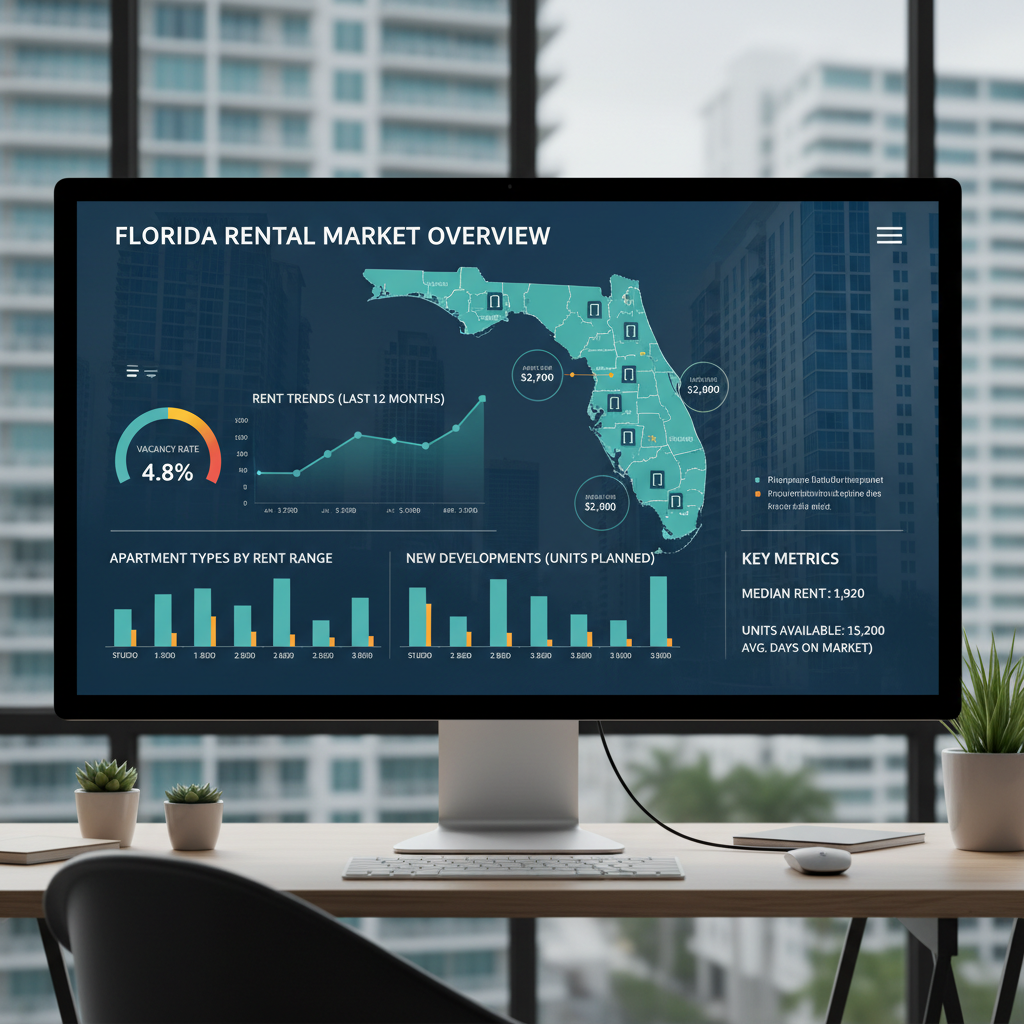
Across Florida, vacancy rates have increased notably over the past 12 to 18 months. In many markets, vacancy is approaching or exceeding what would traditionally be considered a "balanced" level. In practical terms, this means more available units, longer leasing times, and increased competition.

This shift is largely the result of new supply. Thousands of multifamily units have come online across the state, particularly in metro areas like Jacksonville, Tampa, and Orlando. At the same time, in-migration has slowed from its pandemic peak, and many tenants are adjusting their housing choices due to affordability concerns.

For landlords, the implication is straightforward: vacancy is now a cost center that must be actively managed—not assumed away.

Rent Growth Has Slowed—or Reversed

Another key index—rent growth—has undergone a significant change.

Where rents were once increasing at double-digit rates, growth has now flattened, and in some markets, turned slightly negative. Properties that pushed rents aggressively in 2021–2023 are now encountering resistance from tenants who simply cannot absorb further increases.

In markets like Jacksonville, modest rent declines have already been reported. Even where rents are holding steady, the pace of increase has slowed dramatically.

The takeaway is critical: The era of automatic rent increases is over—at least for now.

Landlords who continue to price based on last year's expectations risk extended vacancies, which are far more costly than modest pricing adjustments.

Occupancy Remains Stable—But Softer

Occupancy rates remain relatively healthy, but they are no longer tightening. Instead, they are drifting downward slightly as new supply enters the market.

Units are still leasing—but more slowly. Prospective tenants are taking longer to decide, comparing more options, and negotiating more aggressively.

This creates a subtle but important shift in leverage. Where landlords once dictated terms, tenants now have meaningful choices.

Florida Landlord Network — Evictions Done Right. Done Fast. Flat fee starting at $395.00. Call 800-809-1530. FLALandlord.com. Statewide coverage.

Affordability Is a Long-Term Strength

One bright spot in Florida's rental market is affordability—particularly in cities like Jacksonville.

Compared to national averages, many Florida markets still fall below the commonly cited affordability threshold of 30% of income spent on housing. This supports long-term demand and provides a foundation for future rent growth once the current supply surge stabilizes.

In other words, while the short-term picture shows softening, the long-term outlook remains fundamentally strong.

Supply Is Driving the Market

The dominant force behind current conditions is supply. New construction—especially in the multifamily sector—has temporarily outpaced demand.

However, much of this new inventory is concentrated in higher-end units. Meanwhile, the supply of truly affordable housing continues to decline over the long term.

This imbalance suggests that today's softer conditions may not last indefinitely. Once new construction slows, the market could tighten again—particularly in workforce housing segments.

What This Means for Landlords

The Florida rental market is not collapsing—it is normalizing. But normalization requires a different approach.

Successful landlords in this environment will:

  • Price realistically based on current conditions, not past trends
  • Act quickly when tenants fall behind or units become vacant
  • Focus on occupancy over maximum rent
  • Operate professionally, with strong systems and documentation

The landlords who struggle will be those who assume the market still favors them.

Bottom Line

Florida's rental market in 2026 is defined by shifting indices:

  • Vacancy is rising
  • Rent growth is slowing
  • Supply is elevated
  • Tenant leverage is increasing

For experienced landlords, this is not bad news—it is simply a new phase of the cycle.

And as always, those who adapt to the data will outperform those who ignore it.

Disclaimer: Florida Landlord Network is a non-attorney service. This article is for informational purposes only and does not constitute legal advice. Consult a licensed Florida attorney for guidance specific to your situation.

Stay Informed

Get Florida landlord news and legal updates by email.

We use your email to send you our newsletter. See our Privacy Policy. Unsubscribe at any time.

Comments

Comment submission is temporarily unavailable while we review our moderation process.

Important Notice: Florida Landlord Network is an independent, non-attorney service. We urge you to consult an attorney before relying on any publication, using any document or described procedure found herein. Florida Landlord Network is not licensed by the Florida Bar to practice law and is not authorized to give legal advice or tell you your legal rights.