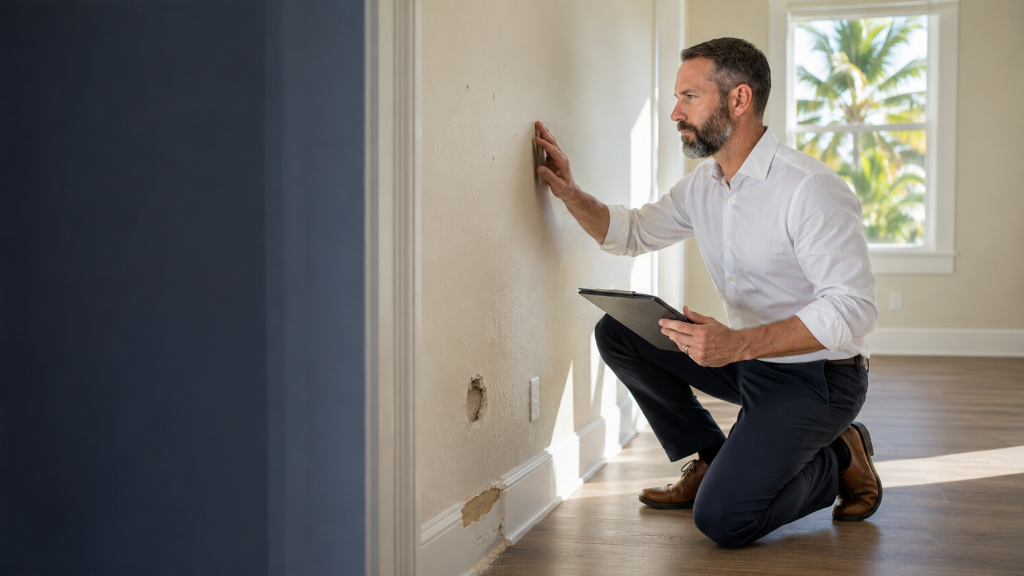
Florida’s security-deposit statute allows claims for lawful amounts due, but it does not provide a simple chart defining every scratch, stain, nail hole, or worn carpet. The decision turns on the lease, the property’s original condition, the nature and severity of the change, the length and normal use of the tenancy, and reliable evidence.
Ordinary Wear
Ordinary wear is deterioration that occurs through normal residential use and aging. Common examples may include:
- Light traffic wear on flooring
- Minor wall scuffs from ordinary use
- Faded paint from time and sunlight
- Worn appliance components from normal service
- Minor settling cracks
- Finish deterioration caused by age rather than misuse
These examples are not automatic rules. A small mark in one tenancy may be wear; widespread or severe damage may not be.
Tenant-Caused Damage
Potentially chargeable damage may include:
- Large holes, broken doors, or damaged cabinets
- Burns, pet urine, or unusual staining
- Missing fixtures, screens, shelves, or appliances
- Unauthorized alterations requiring restoration
- Negligent water damage
- Excessive trash or personal property requiring removal
- Damage caused by unauthorized animals or occupants
A landlord should not use a tenant’s deposit to obtain a windfall. Replacing an old, nearly exhausted item with a new one may require a reasonable adjustment for age and remaining useful life. If a ten-year-old carpet had little useful life left, charging the tenant the full cost of premium new flooring is difficult to justify even if the tenant caused some damage.
There is no universal Florida statutory depreciation schedule for every residential component. Use credible manufacturer information, tax records where relevant, industry practice, actual age, prior condition, and common sense. Explain the calculation.
Cleaning Charges
Cleaning deductions should be tied to the lease and actual condition. Routine turnover cleaning that occurs after every tenancy may be an owner expense. Extraordinary cleaning caused by the tenant may be chargeable when properly documented.
Photograph grease, debris, heavy soil, animal waste, smoke residue, or other unusual conditions before cleaning begins. Preserve invoices and describe the work beyond ordinary turnover.
The Evidence Test
Before charging the tenant, ask:
- Can we prove the item’s move-in condition?
- Can we prove its move-out condition?
- Does the lease make the tenant responsible?
- Is this more than normal use and aging?
- Is the requested amount reasonable?
- Are we charging only for the tenant’s portion rather than an upgrade?
- Could we explain this calmly to a judge using documents and photographs?
If the answer to several questions is no, the deduction should be reconsidered.