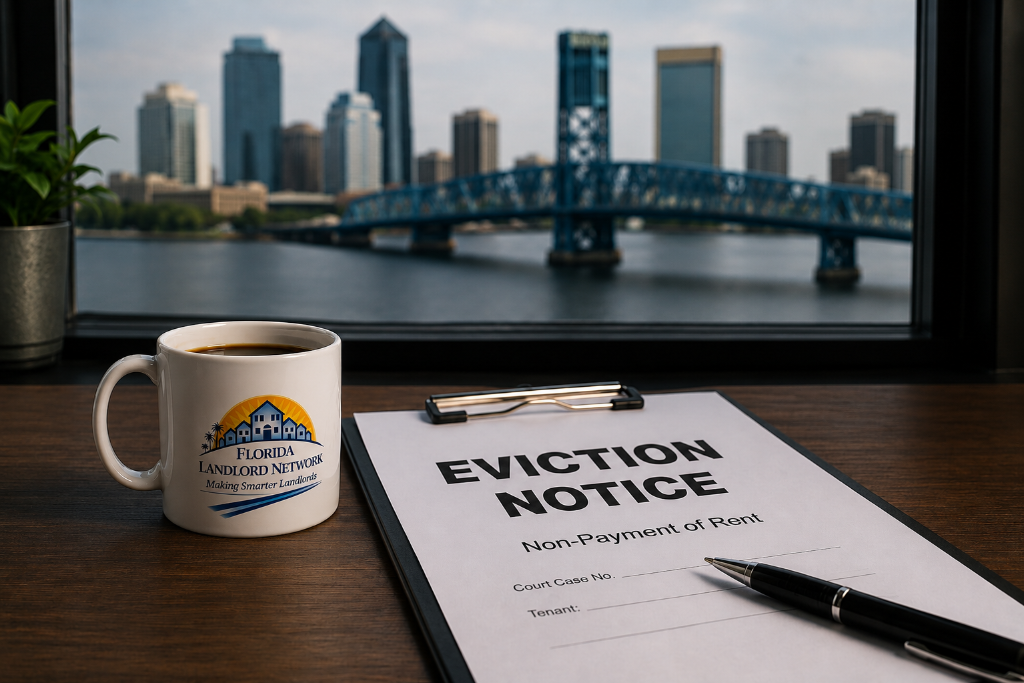
If you've watched the local news over the past year, you've probably heard Jacksonville described as the "eviction capital of Florida." The phrase comes from research by the JAX Rental Housing Project at the University of North Florida and has been repeated by local media outlets and housing advocates. (WJXT)
But there's an important question that rarely gets asked:
Why are these evictions being filed?
The headlines often leave readers with the impression that Jacksonville landlords are unfairly forcing tenants out of their homes. That's an incomplete picture.
The overwhelming majority of residential eviction cases in Florida are filed because rent wasn't paid. An eviction filing is not the cause of the problem—it's usually the result of it.
Critics frequently focus on the final step in the process while ignoring what led to it. That's like criticizing a bank for foreclosing on a mortgage after months of missed payments, blaming an auto finance company for repossessing a car when the loan isn't paid, or condemning the electric company for disconnecting service after repeated unpaid bills.
In every one of those situations, the company isn't punishing someone—it is enforcing a contract after the customer failed to meet their obligation.
Rental housing works exactly the same way.
No landlord wants to evict a paying tenant. Evictions cost landlords thousands of dollars in lost rent, court costs, repairs, cleaning, and vacancy. A tenant who pays on time is almost always more profitable than an empty apartment.
The better question isn't "Why are there so many eviction filings?"
It's "Why are so many tenants ending up in court for non-payment of rent?"
That's the conversation Jacksonville should be having.

Paul's Take
For more than 25 years, Florida Landlord Network has helped Florida landlords through countless eviction cases. In all that time, I've never met a landlord who wanted to file an eviction.
What I've seen firsthand is that nearly every eviction begins when rent stops being paid. By the time an eviction is filed, the landlord has often lost weeks or even months of rent while still paying the mortgage, property taxes, insurance, and maintenance.
When people call Jacksonville the "eviction capital of Florida," they're blaming the landlord—not the tenant who failed to pay the rent.
If we want fewer evictions, let's stop blaming landlords and start asking why so many tenants fail to pay the most important bill they have—their rent. Solve that problem, and Jacksonville's eviction numbers will crater.