Back to Blog

AI Is Changing Rental Fraud

AI is creating a new generation of sophisticated rental fraud schemes—from fake pay stubs and synthetic identities even deepfake applicants and voice cloning!

By Paul Howard
July 3, 20266 min read
AI fraudasset protectiontenant screeningcybersecurityrental fraud
AI Is Changing Rental Fraud

# AI Is Changing Rental Fraud: What Every Florida Landlord Needs to Know

Artificial intelligence (AI) is transforming the rental housing industry. It is helping landlords market vacancies, communicate with residents, automate routine tasks, and manage properties more efficiently than ever before.

Unfortunately, the same technology is also giving criminals powerful new tools to commit fraud.

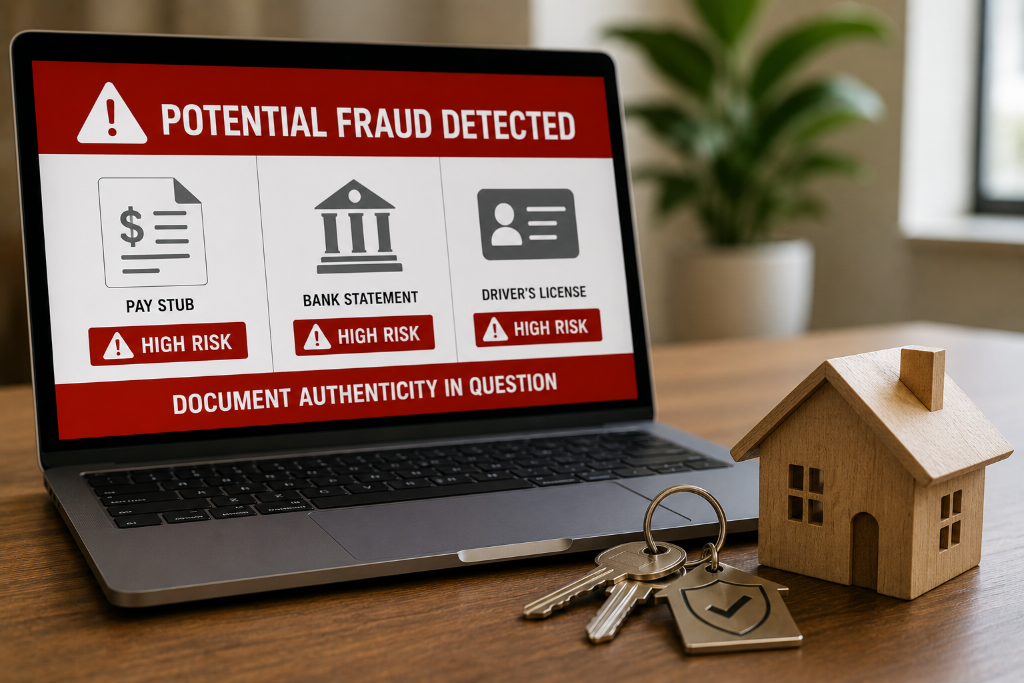
Today's scammers are no longer limited to altering pay stubs with photo-editing software. AI can now generate convincing financial documents, fabricate employment records, create synthetic identities, clone voices, and even produce realistic video "deepfakes." Many of these forgeries are so convincing that they can fool experienced landlords.

Understanding these emerging threats is becoming just as important as understanding Florida's landlord-tenant laws.

Rental Fraud Has Entered a New Era

Traditional rental fraud typically involved fake references or manually altered documents. Artificial intelligence has changed the game.

With inexpensive AI software, criminals can create professional-looking documents in minutes, including:

  • Pay stubs
  • Bank statements
  • W-2 forms
  • Tax returns
  • Employment verification letters
  • Driver's licenses
  • Utility bills
  • Other identification documents

Each new generation of AI produces documents that are increasingly difficult to distinguish from genuine originals.

AI-Generated Income Documents

One of the fastest-growing forms of rental fraud involves fake proof of income.

Apartment owners across the country report seeing dramatic increases in AI-generated pay stubs, altered bank statements, counterfeit W-2s, and fabricated employment records. What once required advanced graphic design skills can now be produced by almost anyone with an internet connection.

Some fraudsters openly advertise these services online, promising documents that will "qualify for any apartment."

Many of the nation's largest apartment operators have responded by investing in AI-powered fraud detection systems capable of identifying manipulated documents before approving leases.

Most independent landlords simply don't have access to those tools.

The reality is that a professionally generated pay stub may appear completely authentic—even when every number on it is false.

Protect Yourself

Instead of relying solely on documents supplied by an applicant:

  • Verify employment using the employer's publicly listed phone number—not the number listed on the rental application.
  • Compare pay stubs with bank deposits and payroll dates.
  • Request multiple forms of income verification when appropriate.
  • Watch for inconsistencies in formatting, addresses, fonts, and payroll information.
  • Use reputable tenant screening companies that provide identity and income verification whenever possible.

Remember, a fake pay stub may help someone qualify for your rental—but it won't help them pay next month's rent.

Synthetic Identities

Identity theft has evolved as well.

Rather than stealing an entire identity, criminals increasingly create synthetic identities by combining legitimate and fabricated information, such as:

  • A real Social Security number
  • A fictitious name
  • AI-generated photographs
  • Fake employment history
  • Fabricated addresses

Some synthetic identities eventually establish legitimate credit histories, making them surprisingly convincing during the screening process.

Deepfake Applicants

Artificial intelligence can now generate remarkably realistic video and audio.

  • Imagine conducting a Zoom interview with an applicant.
  • They answer every question naturally.
  • Their driver's license appears legitimate.
  • Their facial expressions and voice seem authentic.
  • The person you're interviewing may not even exist.

Although still relatively uncommon in residential leasing, cybersecurity experts expect deepfake identity fraud to become far more common over the next several years.

Employment Verification Isn't What It Used to Be

Employment verification has also become far more complicated.

AI can quickly generate:

  • Professional company websites
  • Employee directories
  • LinkedIn profiles
  • Employment records
  • Corporate email addresses

Some fraud operations even maintain fake Human Resources departments.

When a landlord calls to verify employment, they may unknowingly be speaking with another member of the scam.

Always obtain company contact information independently instead of relying on what's listed on the rental application.

Voice-Cloning Scams

AI now needs only a few seconds of recorded audio to clone someone's voice with startling accuracy.

Imagine receiving a phone call that sounds exactly like your property manager requesting an emergency wire transfer—or a contractor telling you payment instructions have changed.

Voice-cloning scams are becoming increasingly common.

Whenever money is involved, confirm unusual requests using another trusted method of communication before sending funds.

Fake Maintenance Invoices

Artificial intelligence also makes invoice fraud easier.

Scammers can generate convincing:

  • Repair estimates
  • Work orders
  • Inspection reports
  • Invoices
  • Before-and-after photographs

Before paying any invoice, confirm that the work was actually completed.

Florida Landlord Network — Evictions Done Right. Done Fast. Flat fee starting at $395.00. Call 800-809-1530. FLALandlord.com. Statewide coverage.

Fake Rental Listings

Some AI-assisted scams don't target landlords directly—they target prospective tenants.

  • Criminals steal photographs from legitimate rental advertisements and repost them on social media and rental websites.
  • Unsuspecting renters send deposits.
  • The scammer disappears.
  • Meanwhile, angry "tenants" arrive expecting to move into a home that was never available.
  • Search your property's address and photographs periodically to make sure someone isn't advertising your rental without permission.

Protect More Than Just the Screening Process

As AI fraud becomes more sophisticated, landlords should think beyond tenant screening.

They should also protect their assets.

Review Your Insurance

Talk with your insurance professional about whether your coverage includes:

  • Landlord liability insurance
  • Umbrella liability coverage
  • Cyber liability insurance
  • Identity theft protection
  • Social engineering fraud coverage

Many modern cyber policies now cover fraudulent wire transfers, ransomware attacks, electronic theft, and certain AI-related scams.

Protect Your Ownership Structure

Many landlords own rental property through a Limited Liability Company (LLC).

While an LLC will not prevent lawsuits, it may help separate business assets from personal assets when properly established and maintained.

Before making changes, discuss your ownership structure with your attorney or CPA.

Strengthen Digital Security

Your email account may now be one of your business's most valuable assets.

Consider using:

  • Multi-factor authentication
  • Password managers
  • Encrypted cloud storage
  • Secure document sharing
  • Strong email security

A compromised email account can expose years of financial records, tenant information, and banking details.

Best Practices for Today's Landlords

Artificial intelligence isn't the problem.

Poor verification is.

Successful landlords are adapting by:

  • Verifying identities from multiple sources.
  • Never relying on a single document.
  • Independently confirming employment.
  • Applying written screening standards consistently.
  • Using reputable tenant screening services.
  • Slowing down when something seems "too perfect."
  • Documenting every rental decision.

Technology changes rapidly.

Sound business practices do not.

Looking Ahead

Artificial intelligence will continue reshaping the rental housing industry.

It will make landlords more efficient, improve customer service, and simplify many day-to-day operations.

It will also continue providing criminals with increasingly sophisticated tools for deception.

The landlords who thrive won't necessarily own the newest software.

They'll be the ones who combine technology with careful verification, written procedures, healthy skepticism, and good business judgment.

Twenty years ago, online banking forced businesses to adopt new security habits.

Artificial intelligence is creating another one of those moments.

The landlords who educate themselves today will be far better prepared to protect their properties, their businesses, and their financial future.


I've been helping Florida landlords for more than 40 years, and I've watched rental fraud evolve from altered pay stubs made on copy machines to sophisticated AI-generated identities capable of fooling experienced housing professionals.

One lesson has never changed.

Common sense is still your best defense.

The best landlords don't rely on one document, one phone call, or one screening report. They verify information from multiple sources, ask one more question when something doesn't seem right, and never let the pressure to fill a vacancy override good judgment.

Artificial intelligence is here to stay—and that's not necessarily bad. It will become one of the most valuable tools landlords have for managing their businesses. Unfortunately, it will also become one of the most valuable tools available to criminals.

Don't fear AI.

Learn how it works, recognize its risks, and adapt your screening practices accordingly. The landlords who do will be the ones best positioned to protect both their investments and their peace of mind.

Disclaimer: Florida Landlord Network is a non-attorney service. This article is for informational purposes only and does not constitute legal advice. Consult a licensed Florida attorney for guidance specific to your situation.

Stay Informed

Get Florida landlord news and legal updates by email.

We use your email to send you our newsletter. See our Privacy Policy. Unsubscribe at any time.

Comments

Comment submission is temporarily unavailable while we review our moderation process.

Important Notice: Florida Landlord Network is an independent, non-attorney service. We urge you to consult an attorney before relying on any publication, using any document or described procedure found herein. Florida Landlord Network is not licensed by the Florida Bar to practice law and is not authorized to give legal advice or tell you your legal rights.