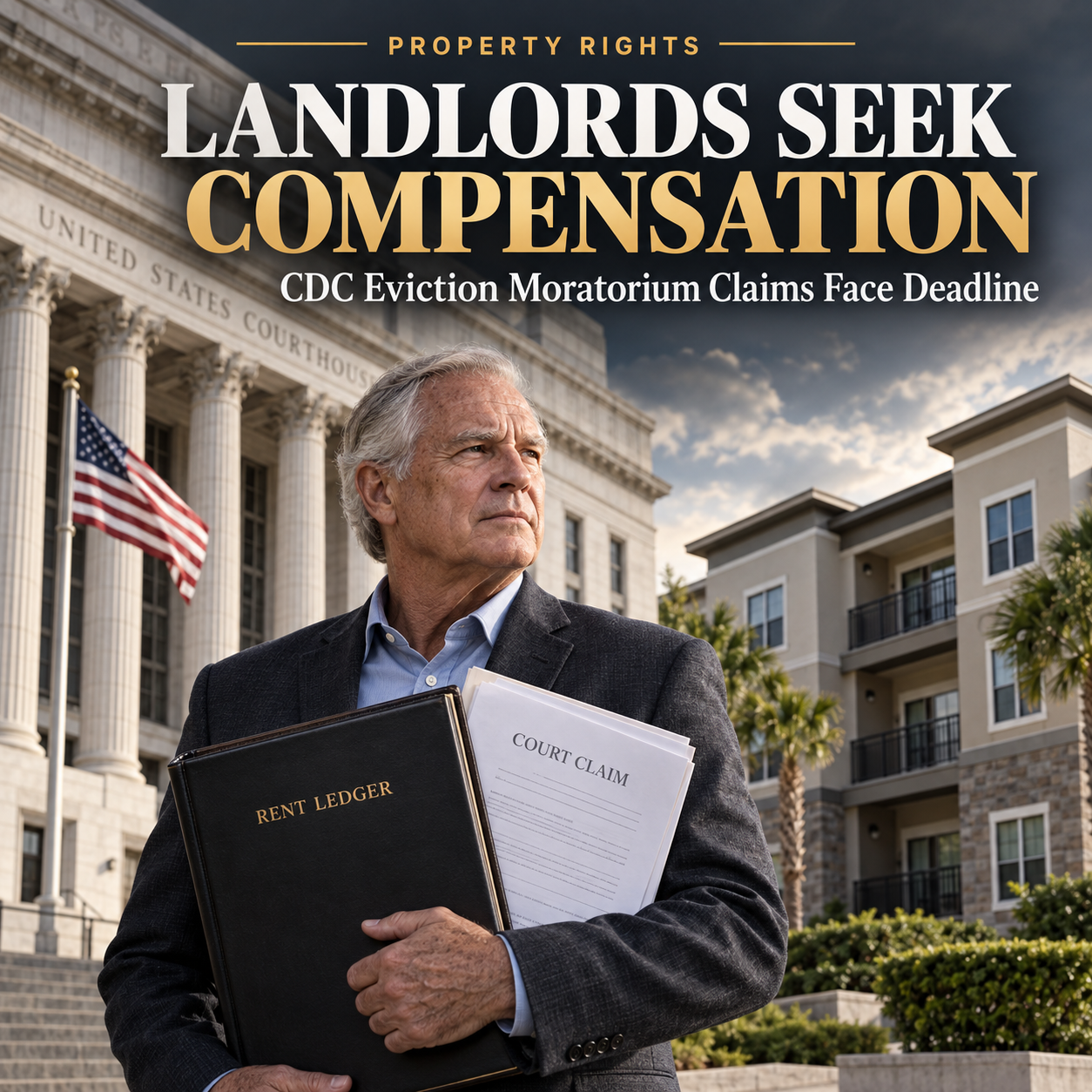
Pittsburgh rental-property owner Rebecca Shaffer is seeking compensation from the federal government for losses she attributes to the Centers for Disease Control and Prevention's COVID-19 eviction moratorium.
Shaffer filed her lawsuit in the U.S. Court of Federal Claims on January 8, 2025. According to the complaint, the federal order prevented her from evicting a nonpaying tenant and regaining possession of her property while she remained responsible for its mortgage, taxes, insurance, repairs and other expenses.
Her attorneys contend that the government's actions amounted to a taking of private property under the Fifth Amendment.
The Constitutional Argument
The Fifth Amendment provides that private property cannot be taken for public use without just compensation.
The government did not acquire title to landlords' properties during the pandemic. Instead, the CDC prohibited many owners from removing tenants who submitted declarations claiming pandemic-related financial hardship.
Landlords challenging the moratorium argue that the practical effect was to require private owners to continue providing housing for a public-health purpose—without guaranteeing payment of rent or compensating owners for the use of their property.
Shaffer's lawsuit seeks damages under this theory. Alternatively, it alleges that the government's action constituted an illegal exaction.
The government has disputed these claims and previously argued that the moratorium was a temporary regulation rather than a physical occupation requiring compensation.
A Major Court Victory for Property Owners
Shaffer's case is part of a broader legal movement that gained significant momentum through Darby Development Co. v. United States.
In June 2025, the U.S. Court of Appeals for the Federal Circuit declined to dismiss the landlords' takings claims. The federal government subsequently allowed its deadline to seek U.S. Supreme Court review to expire.
As a result, the litigation returned to the Court of Federal Claims for further proceedings, including questions involving eligibility and damages. The ruling allows property owners to pursue compensation; it does not mean every affected landlord will automatically recover money.
The Darby plaintiffs originally estimated potential claims at approximately $26 billion. Reuters reported that the government's decision not to seek Supreme Court review left the Federal Circuit's significant property-rights ruling in place.
National Apartment Association Organizes Owners
The National Apartment Association is also supporting litigation seeking compensation for rental-housing providers affected by the moratorium.
The NAA has called upon eligible housing providers to investigate joining its action before applicable filing deadlines expire. Its campaign is open to rental owners who operated qualifying properties in states subject to the federal moratorium and experienced unpaid rent or related losses.
The exact deadline and eligibility requirements may depend upon the claim, when it accrued and whether an owner is participating in an existing action. Property owners should not assume that reading about the litigation or belonging to an industry association preserves their individual claims.
The NAA's litigation notice warns owners that time limitations apply and encourages potentially affected housing providers to act promptly.
What Florida Landlords Should Gather
A Florida owner who suffered losses during the CDC moratorium should consider locating:
- Leases covering the affected period
- Tenant CDC declarations
- Rent ledgers and payment histories
- Eviction notices and court records
- Communications with tenants
- Rental-assistance applications and payments
- Mortgage, tax and insurance records
- Repair, maintenance and utility expenses
- Documents showing when possession was eventually recovered
- Records of any judgment, settlement or debt collection
Rental-assistance payments, judgments and amounts later recovered may affect any damage calculation. Complete records will therefore be essential.

Paul's Take
The CDC eviction moratorium placed the financial burden of a national public-health policy on a relatively small group of private property owners.
Landlords were required to provide the housing, maintain the property and pay the bills. Yet many were denied the ordinary legal remedy available when rent was not paid.
Emergency government action may sometimes be necessary. But when the government uses private property to accomplish a public objective, the public—not an individual landlord—should bear the cost.
The courts have now opened a meaningful path for owners to seek compensation. That is an important victory for private-property rights, but it remains litigation—not a guaranteed reimbursement program.
Any landlord who experienced substantial moratorium-related losses should promptly consult an attorney familiar with federal takings claims. Waiting could result in an otherwise valid claim being barred by the applicable statute of limitations.
This article provides general information and is not legal or tax advice. Florida Landlord Network is a non-attorney service. Consult qualified counsel about your eligibility, deadlines and potential damages.