Florida's rental affordability gap remains substantial, according to the University of Florida's 2025 Statewide Rental Market Study.
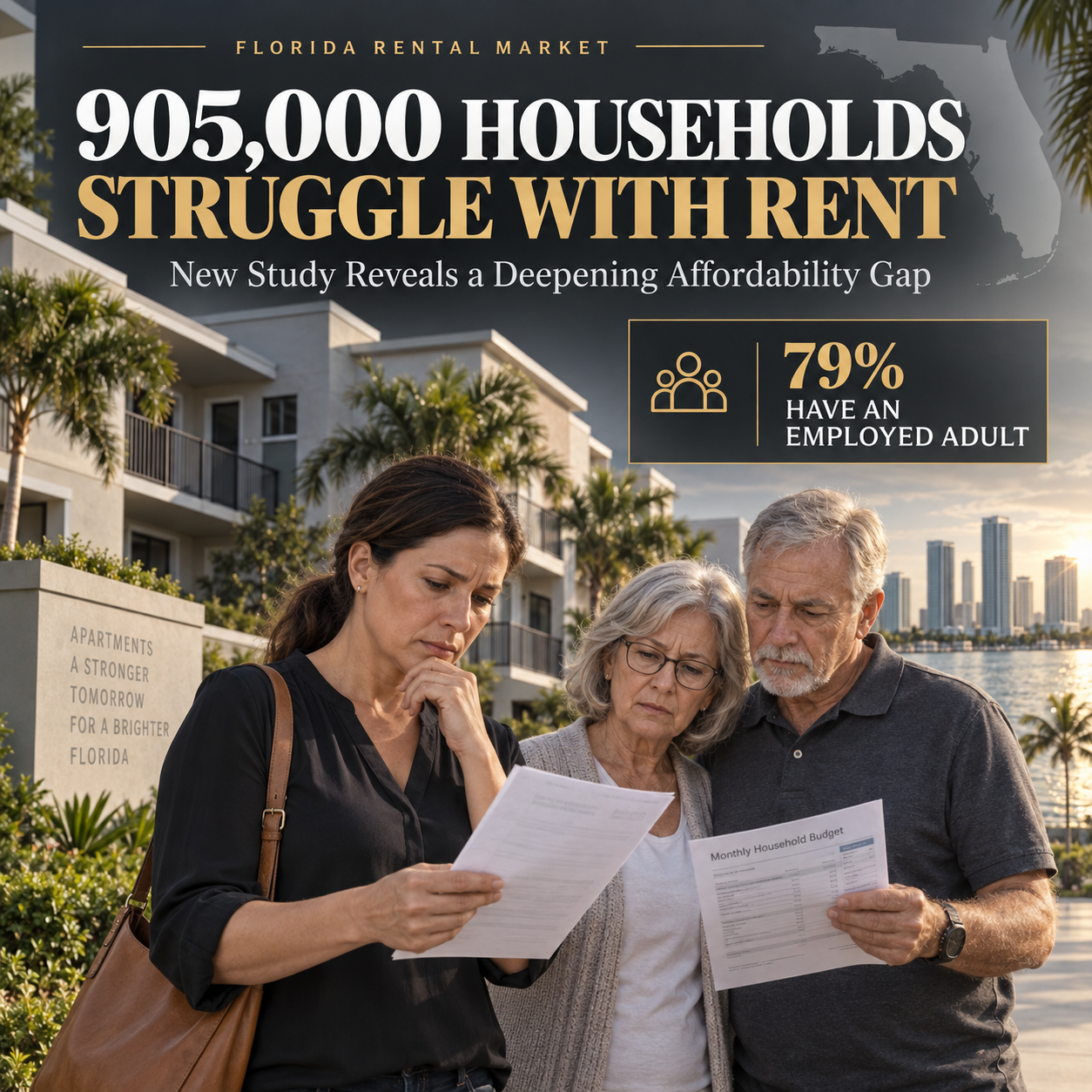
The study, prepared by the Shimberg Center for Housing Studies for the Florida Housing Finance Corporation, identified approximately 904,635 low-income renter households spending more than 40% of their income on housing.
These households earn less than 60% of their area median income. Spending such a large share of income on rent leaves families vulnerable to financial emergencies, job interruptions and unexpected medical or transportation expenses.
Yet the findings also point to a significant opportunity for Florida's real estate industry.
Florida Renters Are Working
The affordability problem is not driven simply by unemployment. Approximately 79% of Florida renter households have at least one employed adult.
Florida added more than one million households between 2019 and 2023, including nearly 200,000 renter households. Although more than 240,000 multifamily units were added during that period, lower-cost rental housing failed to keep pace with demand.
Median rent reportedly increased from $1,238 to $1,719—a 39% increase in four years.
"Florida's strong population growth has collided with limited housing supply, pushing rents beyond what many families can afford," said Anne Ray of the Shimberg Center. The University of Florida's report summary explains that the study will help guide the state's multifamily housing investments.
Older Renters Are a Growing Market
Floridians age 55 and older represent nearly 40% of the low-income, cost-burdened renter households identified by the study.
This growing group may create opportunities for owners who provide well-maintained, moderately priced rentals with practical features such as:
- Single-story living or elevator access
- Good lighting and secure entrances
- Walk-in showers and accessibility improvements
- Proximity to healthcare, shopping and transportation
- Predictable rent and responsive property management
Older residents frequently value stability and may remain in suitable properties for longer periods, reducing turnover and vacancy expenses for owners.
Preserving Existing Rentals May Offer the Best Results
Although Florida needs additional housing, new construction remains challenging. High land and labor costs, development delays, interest rates and elevated insurance premiums can make it difficult to produce new apartments at rents working households can afford.
Acquiring and improving existing rental property may be a more practical alternative.
Investors can preserve older apartments, duplexes and small rental communities through rehabilitation, better management, energy-efficiency improvements and updated safety systems. This can extend the useful life of existing housing while avoiding some of the cost and delay associated with ground-up construction.
Since 1993, Florida has lost 665 assisted-housing developments through expiring restrictions, deterioration, foreclosure or conversion to market-rate housing. The Shimberg Center's preservation research identifies refinancing, rehabilitation and extension of affordability restrictions as strategies for protecting this inventory.
Note: See Sell or Refinance: What Selling Your Rental Property Really Costs.
Investment Opportunities Require the Right Structure
Affordable and workforce housing does not mean owners must operate at a loss. However, the economics must be structured carefully.
Depending on the property and intended residents, investors may explore:
- Low-Income Housing Tax Credits
- Florida's State Apartment Incentive Loan program
- Tax-exempt bond financing
- Local housing trust funds
- Rehabilitation grants or low-interest loans
- Utility and energy-efficiency incentives
- Public-private development partnerships
These programs can help bridge the difference between the rent residents can reasonably pay and the actual cost of acquiring, improving and operating the property.

Paul's Take
Florida's housing shortage should not be viewed only as a crisis. It also represents one of the clearest long-term opportunities in rental-property investing.
The strongest opportunity may not be luxury apartments competing for affluent residents. It may be clean, safe and professionally managed housing serving teachers, healthcare workers, tradespeople, retirees and other Floridians who earn regular incomes but cannot absorb continually rising rents.
Independent landlords are especially well positioned to serve this market. They can acquire smaller properties, make improvements gradually and respond more quickly than large institutional owners.
The key is disciplined purchasing. An investor should not assume that strong demand can rescue a property acquired at the wrong price. Taxes, insurance, repairs, financing and realistic rents must all be included in the analysis.
When the numbers work, workforce housing can combine reliable demand, longer-term investment value and a genuinely beneficial role in the community.