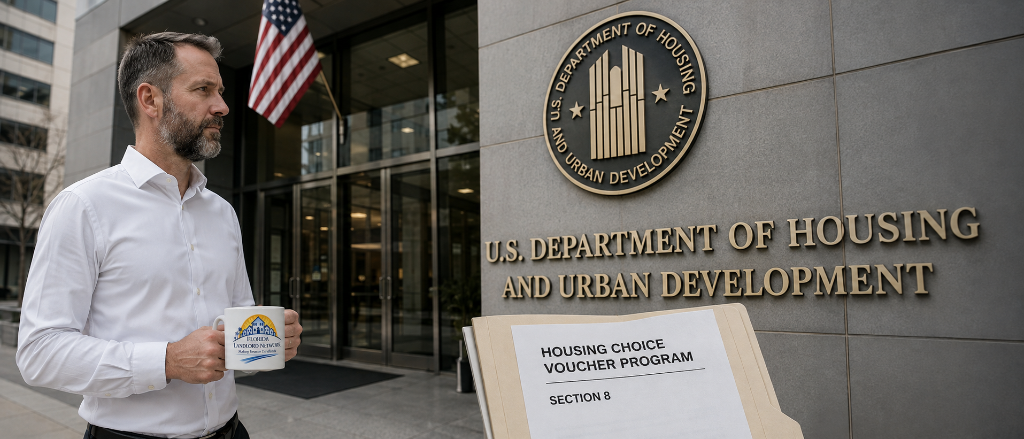
The proposed Landlord Accountability Act would restrict landlords from rejecting applicants because they use housing vouchers, Social Security or other lawful income—but the measure has not advanced beyond its introduction.
A federal proposal pending in Congress would add “source of income” to the protected categories covered by the Fair Housing Act, potentially changing how landlords throughout Florida evaluate rental applicants.
The Landlord Accountability Act of 2025, H.R. 206, was introduced January 3, 2025, by Rep. Nydia Velázquez, D-New York. It was referred to the House Financial Services, Ways and Means, and Judiciary committees.
As of August 2026, the bill remains at the introduced stage. It has not received a committee vote, passed either chamber of Congress or become law.
The bill would amend the federal Fair Housing Act to prohibit housing discrimination based on an applicant’s lawful source of income.
Protected sources would include:
- Section 8 Housing Choice Vouchers.
- Federal, state and local rental assistance.
- Social Security and disability benefits.
- Spousal and child support.
- Payments from trusts, guardians, co-signers or relatives.
- Savings, investments and other lawful funds.
If enacted, a landlord generally could not reject an applicant merely because some or all of the rent would be paid through a housing voucher or another protected source.
The proposal would not necessarily require landlords to approve every voucher holder. Landlords could continue applying lawful, consistently enforced screening standards relating to rental history, criminal history, creditworthiness and the applicant’s ability to pay the tenant’s portion of the rent. Those standards could not be used as a pretext for source-of-income discrimination.
Penalties for Intentionally Disqualifying Housing
H.R. 206 would also target landlords who intentionally allow a rental unit to become unsafe or uninhabitable to prevent it from qualifying for HUD assistance.
A landlord found responsible could face a $100,000 federal civil penalty for each intentional act or failure to act. An affected tenant could also bring a civil action seeking $50,000 per violation, actual damages and relocation costs.
The provision requires intent. An ordinary maintenance delay or failed inspection would not automatically establish that the landlord deliberately attempted to disqualify the property.
Restrictions on Intentionally Vacant Units
Owners of certain HUD-assisted multifamily properties could face penalties for intentionally leaving an available unit vacant for more than 60 days.
The proposed penalty is $100,000 for every additional 30 days the unit remains intentionally vacant. Time reasonably required for repairs, renovation or refurbishment would generally be excluded, although the presumption could be challenged if the work took longer than reasonably necessary.
This provision is directed at qualifying HUD-assisted multifamily projects, not every privately owned single-family rental.
The bill would require HUD to increase staffing for its Multifamily Housing Complaint Line and create a formal complaint-resolution program for voucher tenants.
HUD would investigate complaints, notify landlords of alleged violations and attempt to resolve disputes, including through mediation. Information identifying the property and describing the complaint and its disposition would be published on a federal website.
Maintenance Tax Credit Offered
The legislation also includes an incentive for qualifying owners of low-income multifamily housing.
Eligible landlords could receive a federal tax credit covering qualified maintenance and improvement expenses, subject to limits of:
- $2,500 per qualifying unit.
- $100,000 per eligible project.
- $500,000 per taxpayer annually.
To qualify, the project would need at least five units, with at least one occupied by a Section 8 voucher holder. Relevant HUD complaints would generally have to be resolved within 30 days.
What Florida Landlords Should Know
H.R. 206 is only a proposal. It does not currently require Florida landlords to accept housing vouchers or change their tenant-selection procedures.
Its lack of movement since January 2025 and limited sponsorship suggest that enactment is not imminent. Nevertheless, it illustrates continuing federal interest in expanding source-of-income protections and increasing oversight of landlords participating in HUD programs.

Paul’s Take
Section 8 can work well for landlords and voucher holders—when HUD and local housing authorities must earn landlord participation.
If participation becomes mandatory, that incentive disappears. Agencies that no longer need our cooperation have little reason to improve slow inspections, late payments or burdensome procedures. The attitude will inevitably shift from “How can we make this program work?” to “You have no choice.”
Prohibiting discrimination is reasonable. But mandatory participation without mandatory government performance is not accountability—it is coercion.